Wednesday, 29 March 2017

Rio de Janeiro, Brazl

Olympic 2016 was held in this beautiful city. At the time, more news reported are very negative - robbery, pick pockets, dirty and polluted, even famous swimmers reported they have been robbed. I did not see that place is dirty. Of course, I do not like to meet pick pockets or robbers. Common sense is to visit in the daylight time, downtown area, tourist area, do not bring too much cash, do not wear valuable jewelries, go with friends if possible, etc. It is like European cities - Rome, Barcelona, Paris, London, Amsterdam etc., you have to watch out your important stuff. For my trip, I only walk out from cruise ship with ship passenger card and a photo ID with little US cash.

Rio harbour is very beautiful. My trip cruise director said Rio is his most favouriable harbour. Sydney used to be my most favouriable harbour, now, I believe I love Rio.

Entering the harbour:


 Sugarloaf mountain is on the back, a plane took off from Rio airport


Do you agree this harbour is very beautiful? Do you see debris floating?

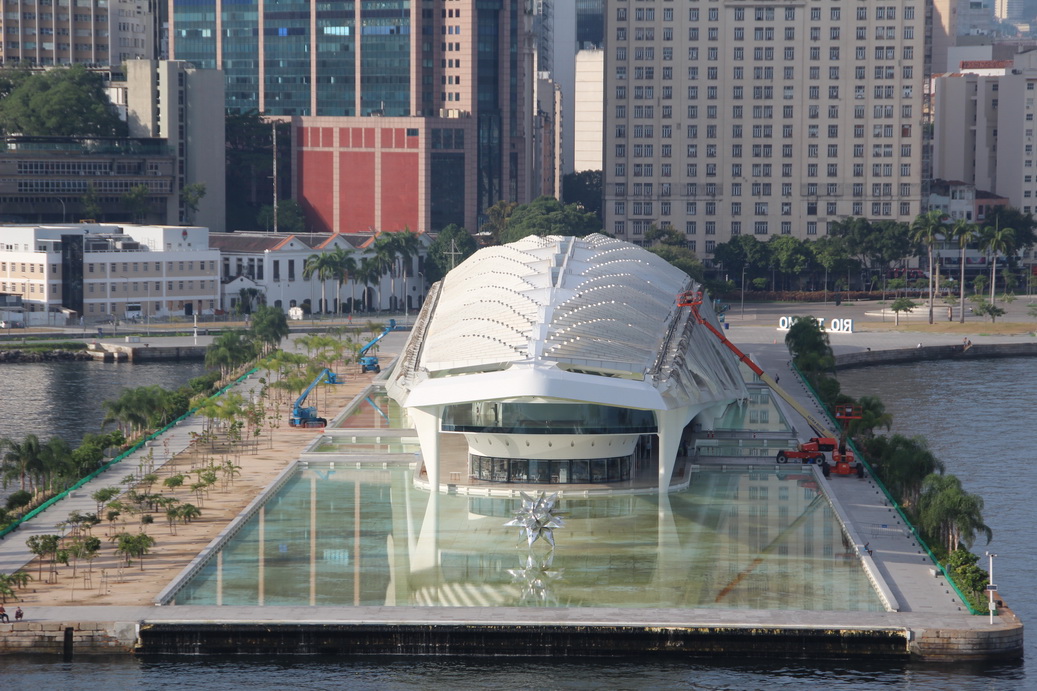
Cruise terminal area:


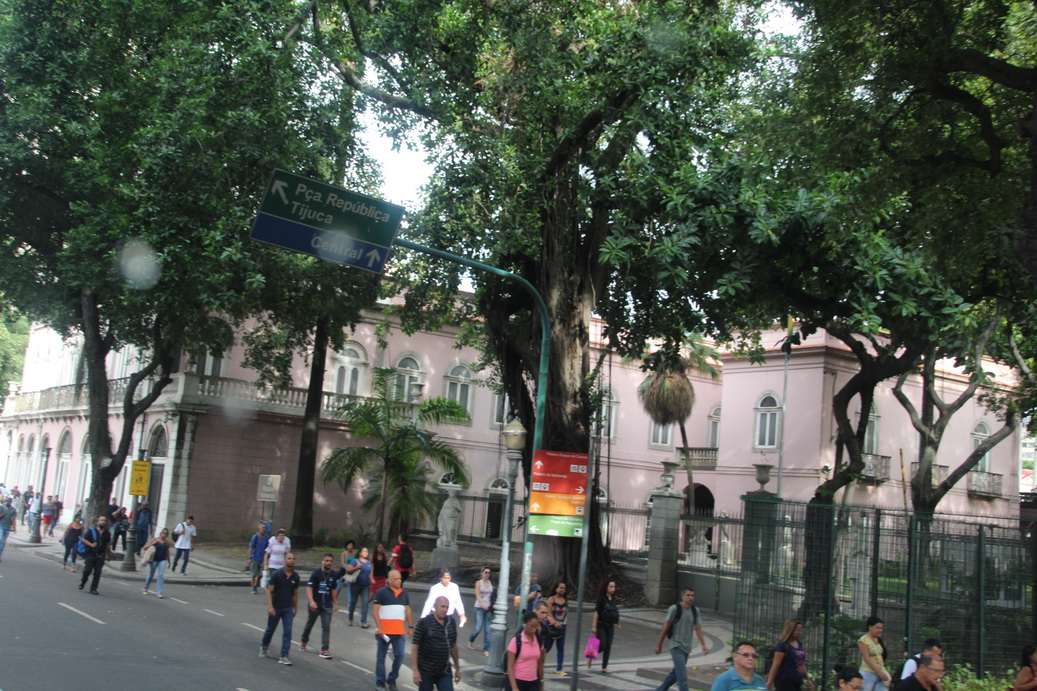
 It is on a Sunday afternoon, very quiet on the street.


Carnaval was just over, but the city still gave us a special performance

The next day, March 6, one excursion trip with cruise line. Major interesting points - Sugarloaf mountain and the  Status of Jesus the Redeemer


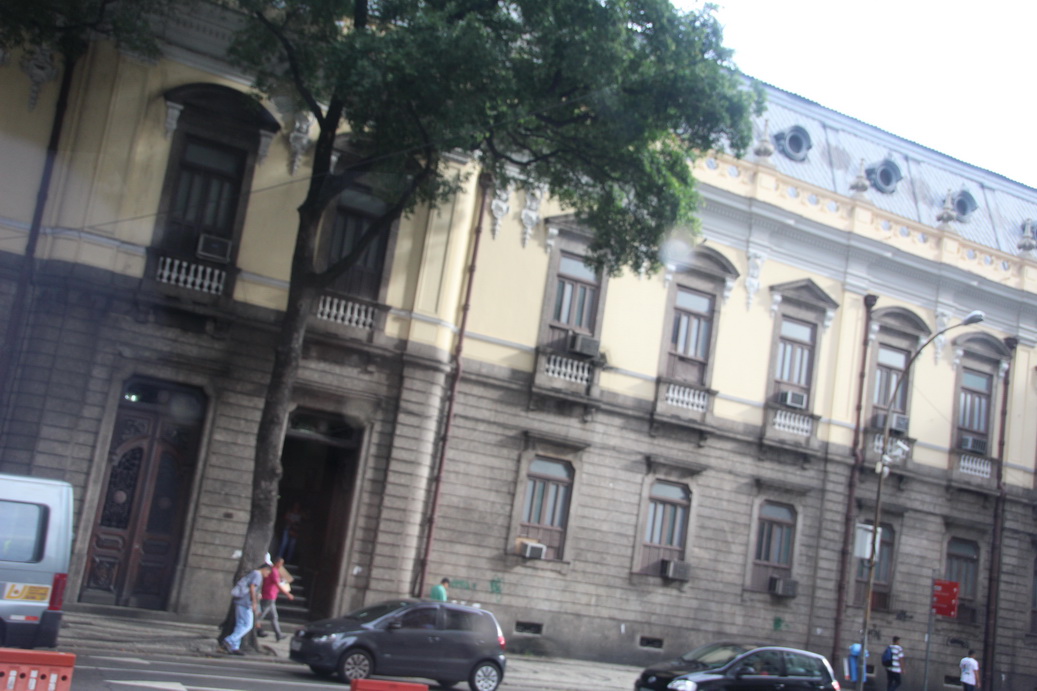
City Drive from terminal to Sugar Loaf mountain


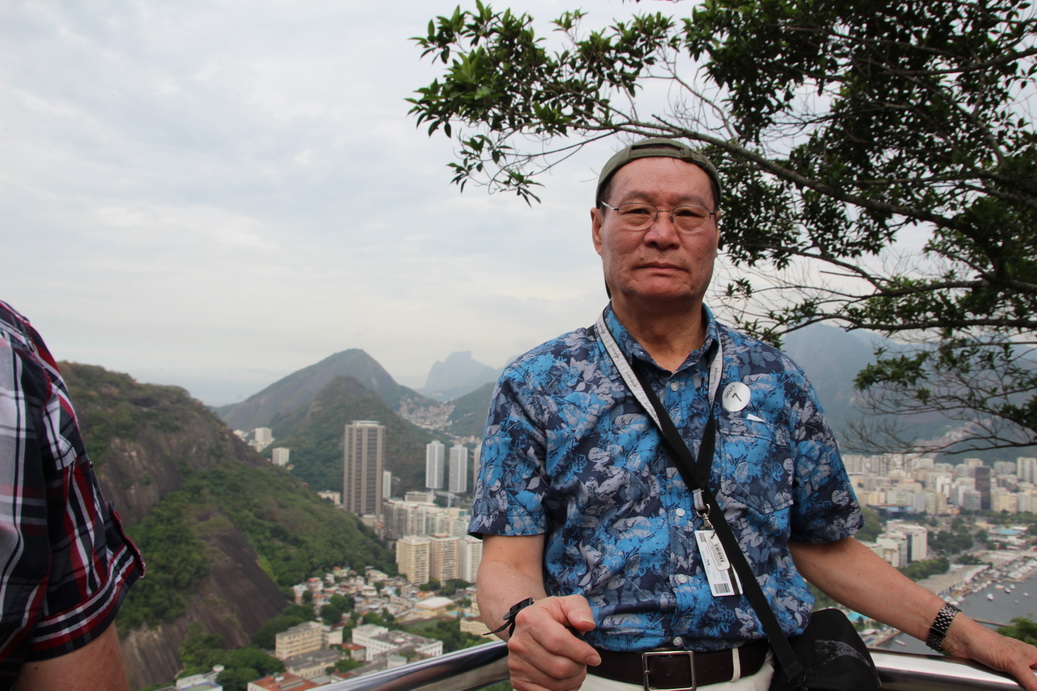
 Sugarloaf Mountain
Sugarloaf is from the following explanation from Wikipedis -
A sugarloaf was the usual form in which refined sugar was produced and sold until the late 19th century, when granulated and cube sugars were introduced. A tall cone with a rounded top was the end-product of a process that saw the dark molasses-rich raw sugar, which was imported from sugar cane growing regions such as the Caribbean and Brazil, refined into white sugar.


The cable car goes from a ground station, at the base of Morro da Babilônia, to Morro da Urca and thence to Sugarloaf's summit. Here is the base.


 From cable car window look out.
Morro da Urca platform
Old type cable cars


 Cable car to summit


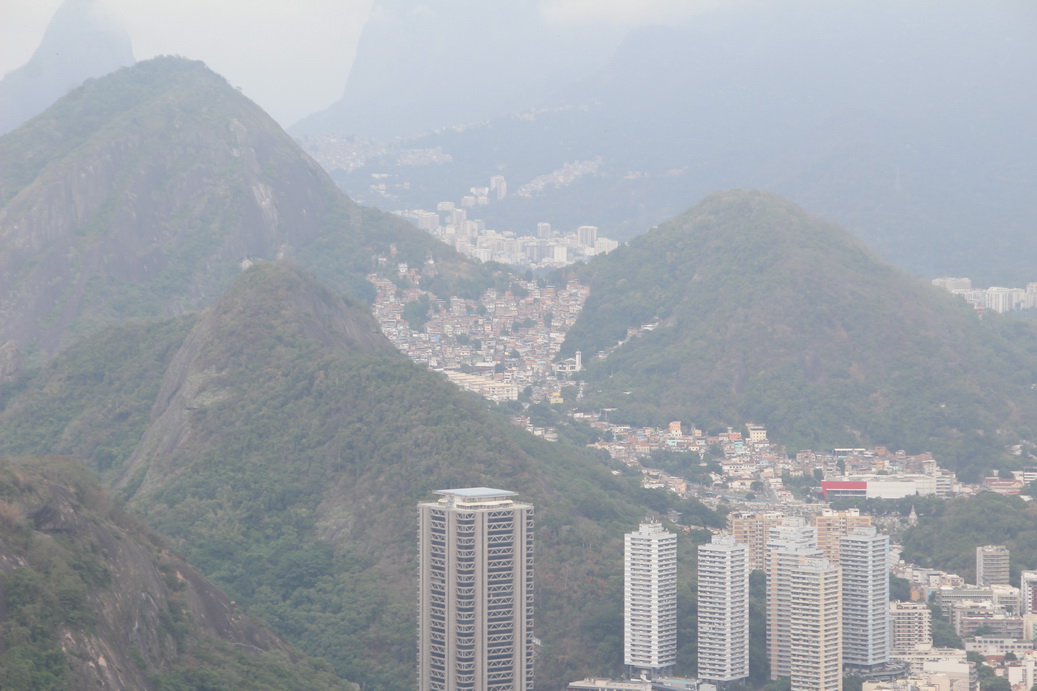
 Now, we can see the famous Copacabana beach


 Top of 2nd stage cable car station


Christ the Redeemer
Christ the Redeemer is an Art Deco statue of Jesus Christ in Rio de Janeiro, Brazil, created by French sculptor Paul Landowski and built by the Brazilian engineer Heitor da Silva Costa, in collaboration with the French engineer Albert Caquot. Romanian sculptor Gheorghe Leonida fashioned the face. The statue is 30 metres (98 ft) tall, not including its 8-metre (26 ft) pedestal, and its arms stretch 28 metres (92 ft) wide.

The Corcovado Train is a rack railway in Rio de Janeiro in Brazil, from Cosme Velho to the summit of the Corcovado Mountain at an altitude of 710 m (2,329 ft). The summit is known for its statue of Christ the Redeemer and its views over the city and beaches of Rio.

Base train station Cosme Velho


 Elevator to the top of the statue. Here is the train stop to get back to the ground.


 Our lunch - Brazilian Barbecue - meat is very tough. It could be uncertified meat because currently there is a news about Brazilian uncertifed or rotten meat for export.


 Subway station
 Copacabana beach


 Brazilian thong bikini


 2017 Canaval location

Sailaway from Rio


 Copacabana beach


Tuesday, 28 March 2017

Buenos Aires, Argetina

This is my second visit to this beautiful city. My last visit was in 2013. There are some kind difference in money exchange. In 2013, one US can change 4.85 Peso, on street Cambio could be 1 US = 7 Peso. In 2017, 1 US = 15 Peso by hotel front desk, on the street can be 1 US = 16 Peso. At street McDonald's, I can feel inflation. Food price is much higher than before. My experience from downtown to cruise terminal, 40 peso in 2013. This time due to several shortage of taxi on March 1, I could not stop one taxi on the famous grand avenue. After 45 minutes waiting, one taxi stopped and asked for 60 US. After negotiation, finally, US 20. That is about 600 peso. Food is no longer cheap. The only thing that is still the same - beautiful streets and buildings.


 Metropolitan Cathedral
San Martin Mausoleum


 Casa Rosada

 Cafe Tortoni
A famous and historical cafe in Buenos Aires. A famous Shanghai TV real people show - 花样姐姐 came to to Buenos Aires, one episode was shot in this famous cafe. It brought my attention, so I have to see this cafe. Just look at the long line up to get in. Actually, I did not get in. 

 The famous entertainment avenue with many famous theatres - Avenida Corrientes

 Shopping Mall - Galerias Pacifico


 La Boca
 La Boca is a neighborhood, or barrio of the Argentine capital, Buenos Aires. It retains a strong European flavour, with many of its early settlers being from the Italian city of Genoa.


 Women's Bridge
Puente de la Mujer (Spanish for "Women's Bridge"), is a rotating footbridge for Dock 3 of the Puerto Madero commercial district of Buenos Aires, Argentina. It is of the cantilever spar cable-stayed bridge type and is also a swing bridge, but somewhat unusual in its asymmetrical arrangement. It has a single mast with cables suspending a portion of the bridge which rotates 90 degrees in order to allow water traffic to pass. When it swings to allow watercraft passage, the far end comes to a resting point on a stabilizing pylon.

 Recoleta Cemetary
María Eva Duarte de Perón (7 May 1919 – 26 July 1952) was the second wife of Argentine President Juan Perón (1895–1974) and served as the First Lady of Argentina from 1946 until her death in 1952. She is usually referred to as Eva Perón (Spanish: [ˈeβa peˈɾon]), or by the affectionate Spanish language diminutive Evita. 
EVITA musical drama